
Gendered Futures
The Bell JarThis flow follows Esther’s resistance to the expectation that a woman must trade intellectual ambition for sexual purity, marriage, and domestic service.
increasing Bearing strength in each event
 decreasing
Bearing strength in each eventdecreasingMrs. Willard’s Formula

Marriage as Destiny
A prescribed division
Mrs. Willard describes men as moving toward the future and women as the ground from which they depart. Buddy repeats the formula as if it were common sense.
Esther’s resistance
Esther hears in the saying a demand that women provide security while men retain freedom. The maxim becomes a shorthand for the domestic future she fears.
A Birth Witnessed

The Body and Its Cost
Labor under observation
Esther watches Mrs. Tomolillo give birth while medical staff direct her through intense pain. The scene strips the idealized language of motherhood from the bodily event.
A gendered critique
The drug that makes the mother forget her pain seems to Esther like a male solution that allows the cycle to repeat. Her reaction complicates the assumption that motherhood is every woman’s natural fulfillment.
The Housewife’s Mat
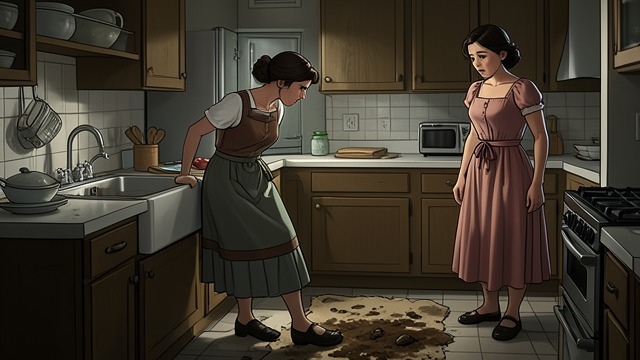
Domestic Work as Erasure
A feared routine
Esther imagines marriage as cooking, cleaning, and serving a husband after his workday. She remembers Mrs. Willard’s handmade rug reduced to a dirty kitchen mat.
The cost of security
The image suggests that a woman’s labor may be valued before marriage and taken for granted afterward. Esther fears being flattened into a domestic function rather than treated as a full person.
Refusing the Proposal

A Future Declined
Naming the refusal
Esther tells Buddy that she will never marry. Rather than seeking a compromise that makes her fit a conventional life, she accepts her desire for incompatible possibilities.
A challenge to diagnosis
Buddy calls her neurotic, but Esther claims the label if it means wanting more than one kind of life. Her answer reclaims the contradiction as hers.
Birth Control as Freedom

A Practical Claim to Agency
A private decision
Esther obtains contraception despite the legal and social restrictions surrounding unmarried women. She treats control over pregnancy as necessary to sexual choice.
Independence made tangible
The fitting represents a step toward a life not organized by fear of motherhood or a man’s permission. She returns to the hospital feeling that she belongs to herself.
during Esther’s early relationship with Buddy
during Esther’s hospital visit to Buddy’s medical school
during Esther’s first night at Constantin’s apartment
during the winter visit to Buddy’s sanatorium
during Esther’s recovery at Belsize
